


Contents
hide
What Is an Omnidirectional Antenna?
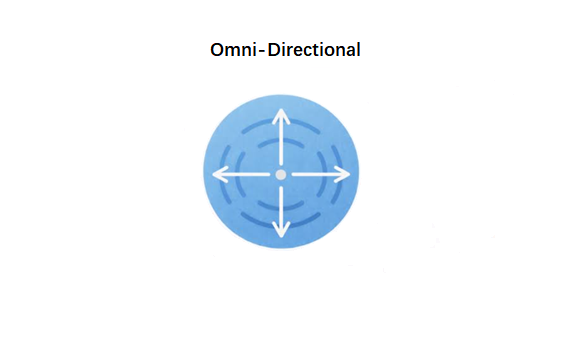
An omnidirectional antenna radiates signals in all directions horizontally (360° coverage). It is designed to communicate with devices located around the antenna.
Advantages
- Covers all directions
- Easy installation and alignment
- Suitable for multiple devices
- Ideal for mobile or changing device locations
Disadvantages
- Lower gain compared to directional antennas
- Shorter communication range
- More susceptible to interference
Common Applications
- WiFi access points
- 868MHz LoRaWAN gateways
- Cellular base stations
- IoT networks
- Marine communications
What Is a Directional Antenna?
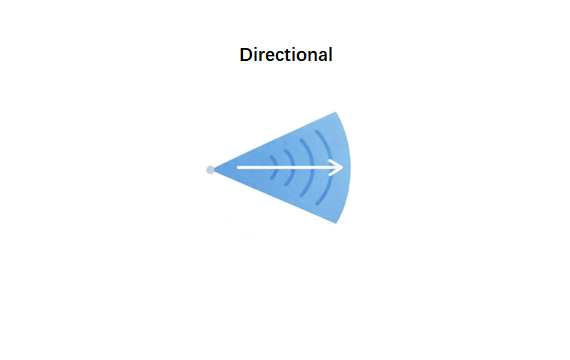
A directional antenna focuses RF energy in a specific direction, providing higher gain and longer transmission distances.
Omnidirectional vs Directional Antenna Comparisons
| Feature | Omnidirectional Antenna | Directional Antenna |
|---|---|---|
| Coverage Pattern | 360° | Focused Beam |
| Signal Range | Short to Medium | Medium to Long |
| Gain | Lower | Higher |
| Installation | Easy | Requires Alignment |
| Interference Resistance | Moderate | Better |
| Best For | Multiple Devices | Single Target |
| Typical Gain | 2-12 dBi | 8-30+ dBi |
Which Antenna Should You Choose?
Choose an Omnidirectional Antenna If:
- Devices are located in multiple directions
- You need wide-area coverage
- Device locations frequently change
- You are deploying a LoRaWAN gateway
Choose a Directional Antenna If:
- You need maximum range
- Devices are in one specific direction
- You want stronger signal strength
- You are building a point-to-point wireless link
Example: 868MHz LoRa Antenna Selection
For a 868MHz LoRaWAN gateway:
- City-wide gateway coverage → Omnidirectional antenna (5–8 dBi)
- Urban long-distance monitoring → Directional antenna (Yagi or Panel, 10–15 dBi)
- Point-to-point LoRa communication → Directional antenna