



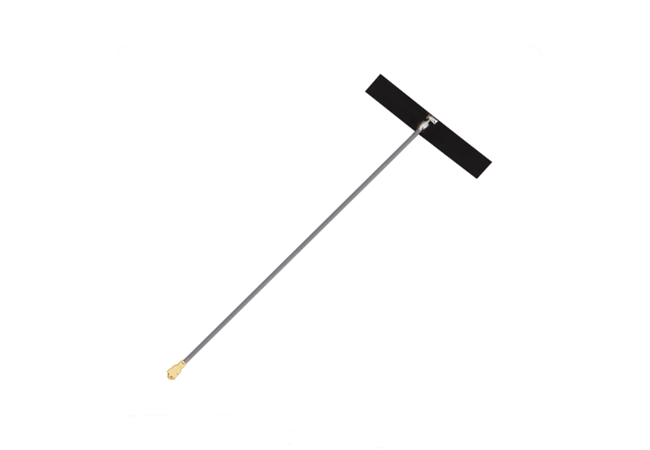
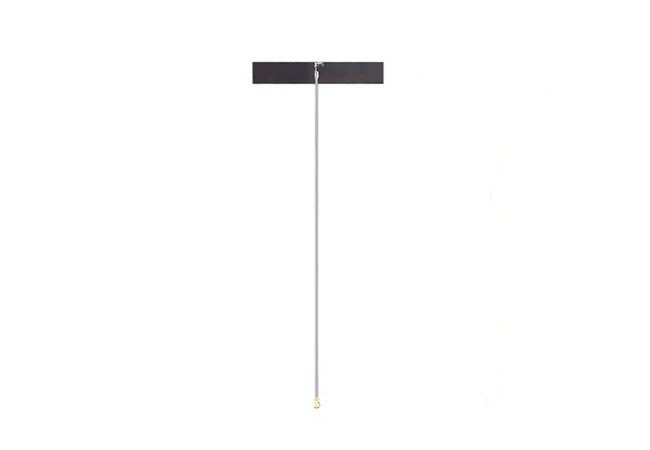
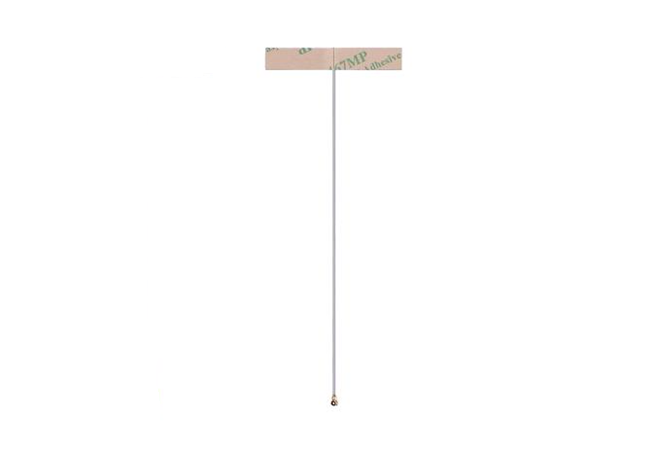
Dual Band 2.4G/5.8G Embedded WIFI Antenna For Smart IoT
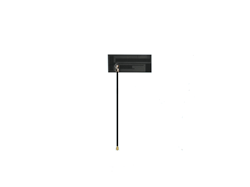
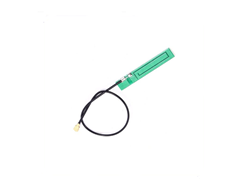
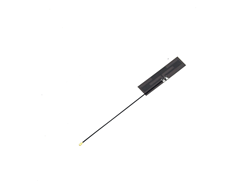
This is an internal flexible PCB embedded wifi antenna with omni-directional radiation pattern for 2.4/5GHz bands.
- Flexible PCB Design
- Ground Plane Independent
- High Efficiency
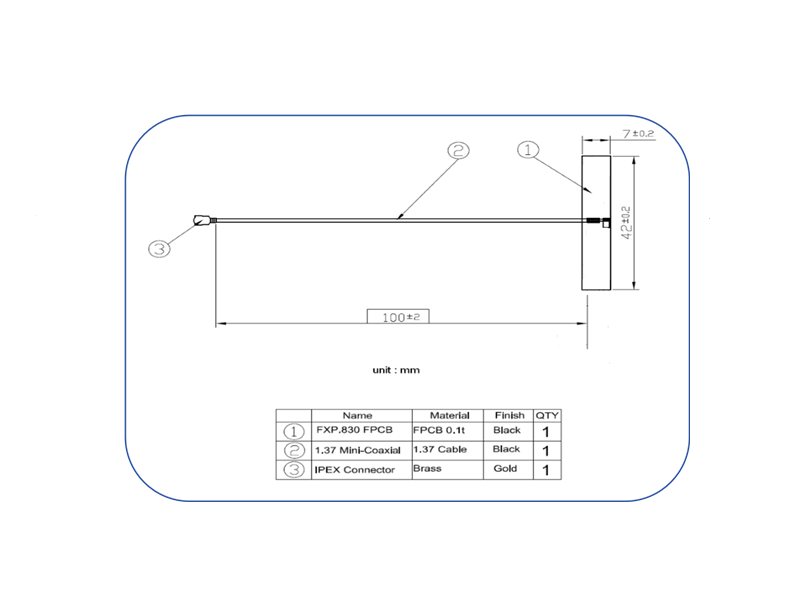
- Dimensions: 42*7*0.1 mm
- Cable: RG1.13 Coaxial Cable
- IPEX (MHF1) Connector
- RoHS Compliant
What is Embedded WIFI Antenna ?
An embedded WiFi antenna is an antenna designed to be installed inside a wireless device or integrated into its PCB, rather than using a visible external antenna such as a rubber-duck or SMA antenna.
Embedded WiFi antennas are commonly designed for 2.4GHz, 5GHz, and 6GHz WiFi bands. They are widely used in compact IoT devices, routers, access points, smart home products, industrial equipment, gateways, and consumer electronics.
Specification table
| Parameter | Specification |
| SKU | MS-2458FPC-001 |
| Frequency Range | 2400∼2483 / 4900∼6000 MHz |
| Center Frequency | 2450 / 5150 MHz |
| Antenna Type | Embedded Antenna |
| Radiation Pattern | Omnidirectional |
| Polarization | Linear |
| Gain | 2 dBi |
| VSWR | ≤ 2.0 |
| Return Loss | ≥ 10 dB |
| Impedance | 50 Ω |
| Connector | U.FL (IPEX MHF1) / IPEX MHF4/ Solder Pad |
| Length | 42± 1 mm |
| Housing Material | Polymer |
| Operating Temperature | -40°C to +85°C |
| Storage Temperature | -45°C to +90°C |
| RoHS Compliance | Yes |
The Key Performance Factors for Embedded WIFI Antenna
Dual-Band 2.4GHz and 5GHz Frequency Support
Our dual-band 2.4GHz 5GHz antenna designs handle both standard WiFi frequencies on a single radiator, eliminating the need for multi-antenna setups.
-
- 2.4 GHz Band: Delivers solid wall penetration and long-distance coverage for general IoT tasks using standard ISM band antenna solutions.
- 5 GHz Band: Offers high data throughput and minimal network congestion for bandwidth-heavy video streaming or industrial automation.
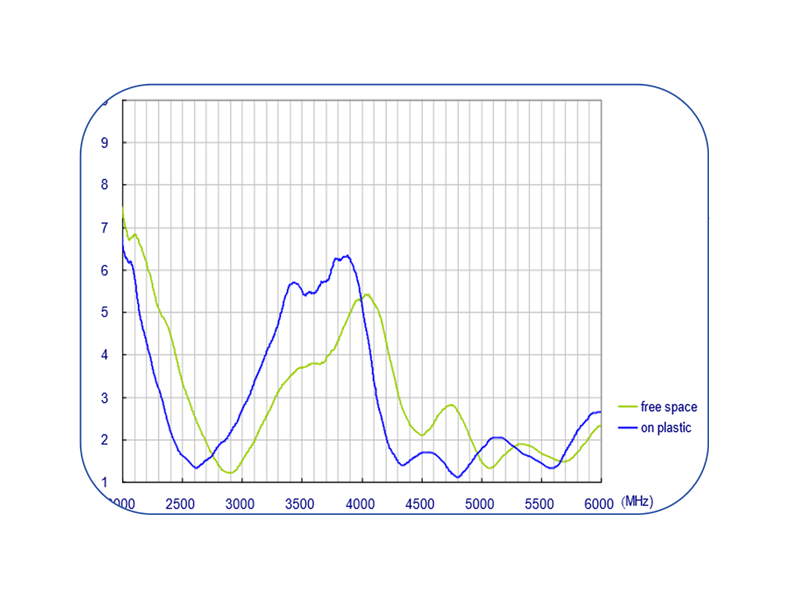
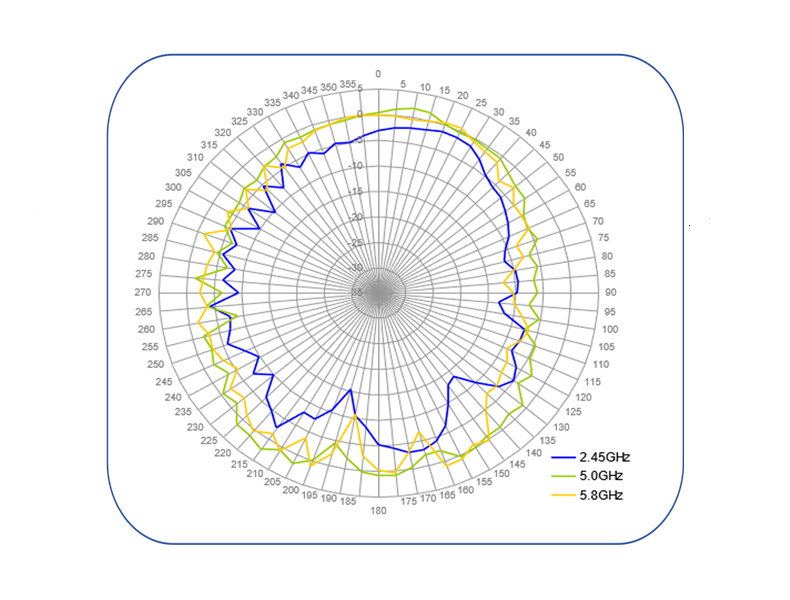
Antenna Gain and Radiation Patterns
This type of embedded wifi antenna with 2dBi peak gain provides equal 360° degree omnidirectional connectivity to all directions, it is perfect for indoor smart portable hardwares.
IPEX/U.FL Connector Types and Cable Specs
| Connector Type | Mated Height | Cable Diameter | Typical Application |
| IPEX MHF1/U.FL | 2.5 mm | 1.13 mm / 1.37 mm coaxial | Standard gateways, routers, and industrial IoT |
| IPEX MHF4 | 1.2 mm | 0.81mm coaxial | Space-constrained wearables and ultra-thin devices |
| Direct Solder Pad | 0 mm | Stripped micro-coaxial | Maximize cost savings in automated high-volume assembly |
Integration and Placement Best Practices
Ground Plane Clearance
- Maintain Keep-Out Zones: Keep ground planes, traces, and metal components clear of the active antenna element.
- Prevent Detuning: Insufficient clearance causes frequency shifts and drops overall antenna efficiency.
- Optimal Sizing: We design our internal PCB antenna and FPC flexible antenna layouts with precise ground plane boundaries to maintain omnidirectional radiation.
Enclosure Material Impact
| Enclosure Factor | Impact on RF Signal | Engineering Solution |
| Glass / Ceramic | Moderate signal attenuation | Tune the antenna matching network to compensate for loading |
| Metal / Aluminum | Total signal attenuation | Never place an internal antenna directly inside a sealed metal case |
| Plastic/ABS Housing | Low loss, slight dielectric shift | Keep a 2–3 mm gap between the antenna and the plastic shell |
Cable Routing and RF Noise
- Separate RF and Power Lines: Route micro-coaxial cables with IPEX/U.FL connectors away from high-speed CPU buses, display drivers, and switching regulators.
- Avoid Sharp Bends: Maintain minimum bend radii to prevent cable damage and insertion loss.
- Fix Cable Position: Secure cable runs with non-conductive tape to maintain signal stability under vibration.
Wireless Coexistence
Operating Wi-Fi alongside Bluetooth or other IoT modules in the same device requires clear isolation strategies:
-
- Physical Distance: Separate dual-band 2.4/5GHz antennas from adjacent ISM band antennas to reduce cross-talk.
- Filtering and Isolation: Add bandpass filters to RF paths to block adjacent frequency interference.
- Co-Location Layouts: When integrating Wi-Fi with multi-protocol embedded antenna solutions, use grounded shielding cans over active ICs to keep the noise floor low.
Common Applications for Embedded WIFI Antenna
- 1. IoT Devices
- 2. Smart Home Devices
- 3. WiFi Routers and Gateways
- 4. Industrial Wireless Equipment
- 5. Security and Surveillance Devices
- 6. Consumer Electronics
- 7. Portable and Handheld Devices
- 8. Automotive and Transportation Electronics
- 9. Medical and Healthcare Equipment
- 10. Smart Appliances
IoT devices are one of the most common applications for embedded WiFi antennas. Sensors, controllers, gateways, and monitoring devices often have limited internal space, making a compact internal antenna an attractive solution.
Typical IoT applications include:
- Environmental sensors
- Smart monitoring devices
- Wireless controllers
- IoT gateways
- Connected sensors
- Industrial IoT equipment
- Smart metering systems
Smart home products often require wireless connectivity while maintaining a compact and attractive enclosure. An embedded WiFi antenna can be installed inside the plastic housing without requiring an external antenna.
Common applications include:
- Smart plugs
- Smart switches
- Smart lighting
- Smart thermostats
- Smart appliances
- Home automation controllers
- Smart security devices
Embedded WiFi antennas are also used in WiFi routers, gateways, and wireless access equipment. Internal antennas can help manufacturers create compact products while supporting 2.4GHz and 5GHz WiFi connectivity.
For products requiring multiple RF channels, several internal antennas may be integrated into the enclosure to support MIMO configurations.
Industrial equipment often requires reliable wireless communication while operating in space-constrained enclosures. Embedded WiFi antennas can be integrated into industrial controllers, monitoring equipment, automation systems, and wireless gateways.
Applications include:
- Industrial automation
- Machine monitoring
- Wireless PLC systems
- Industrial gateways
- Factory monitoring
- Remote equipment management
Wireless security products can use embedded WiFi antennas to provide connectivity without an externally visible antenna.
Examples include:
- WiFi security cameras
- Video doorbells
- Alarm systems
- Access-control equipment
- Smart sensors
- Wireless monitoring devices
Many consumer electronics products use internal WiFi antennas because manufacturers want to minimize external components and create compact product designs.
Examples include:
- Smart TVs
- Set-top boxes
- Media players
- Wireless speakers
- Smart displays
- Gaming devices
- Networked home appliances
Portable products benefit from the small size and lightweight construction of embedded antennas. FPC and flexible PCB antennas are particularly useful when the internal space is irregular or limited.
Potential applications include:
- Handheld terminals
- Portable computers
- Industrial handheld devices
- POS terminals
- Portable monitoring equipment
- Wireless controllers
Embedded WiFi antennas can also be integrated into certain automotive and transportation electronics that require wireless connectivity.
Applications may include:
- Vehicle infotainment systems
- Passenger WiFi systems
- Telematics equipment
- Fleet-management devices
- Vehicle monitoring equipment
Wireless medical and healthcare equipment may use embedded WiFi antennas where compact integration and reliable connectivity are required.
Examples include:
- Patient monitoring equipment
- Connected medical devices
- Healthcare terminals
- Wireless diagnostic equipment
Modern appliances increasingly use WiFi for remote monitoring and control. An embedded WiFi antenna can be installed inside the appliance while keeping the exterior design clean.
Examples include:
- Smart refrigerators
- Smart washing machines
- Smart ovens
- Air conditioners
- Robot vacuum cleaners
- Connected kitchen appliances
Related Embedded Antennas
Embedded WIFI Antenna FAQs
If you have any questions on embedded wifi antenna, plz check the following questions, if can’t find it, contact me anytime.
No. A fully sealed metal enclosure acts as a Faraday cage, blocking electromagnetic signals completely. For metal-cased devices, we recommend using RF-transparent plastic windows or integrating our specialized embedded antennas positioned near non-metallic openings.
While both deliver dual-band 2.4/5GHz coverage, their physical structure and mounting flexibility differ:
| Feature | Internal PCB Antenna | FPC Flexible Antenna |
| Substrate | Rigid fiberglass board | Flexible polymer film |
| Mounting | Requires flat surfaces or direct soldering | Adheres to curved inner enclosure with 3M tape |
| Form Factor | Stiff, fixed shape | Ultra-thin, bendable compact form factor |
Select connectors based on your module specifications and space constraints: IPEX / U.FL Connector: Standard choice for most IoT RF antenna designs. IPEX MHF4: Ultra-micro connector designed for extremely space-constrained layouts. Cable Length: Keep coaxial cables as short as possible to prevent signal attenuation and maintain strict 50-ohm impedance matching.
Yes. Although most internal Wi-Fi antennas provide an omnidirectional radiation pattern, physical placement and orientation relative to the ground plane impact signal polarization, range, and overall data throughput.